Gutter Guard Mesh vs. Surface Tension: What Actually Works in Summerville's Pine Country?
June 14, 2026 | 8 min read
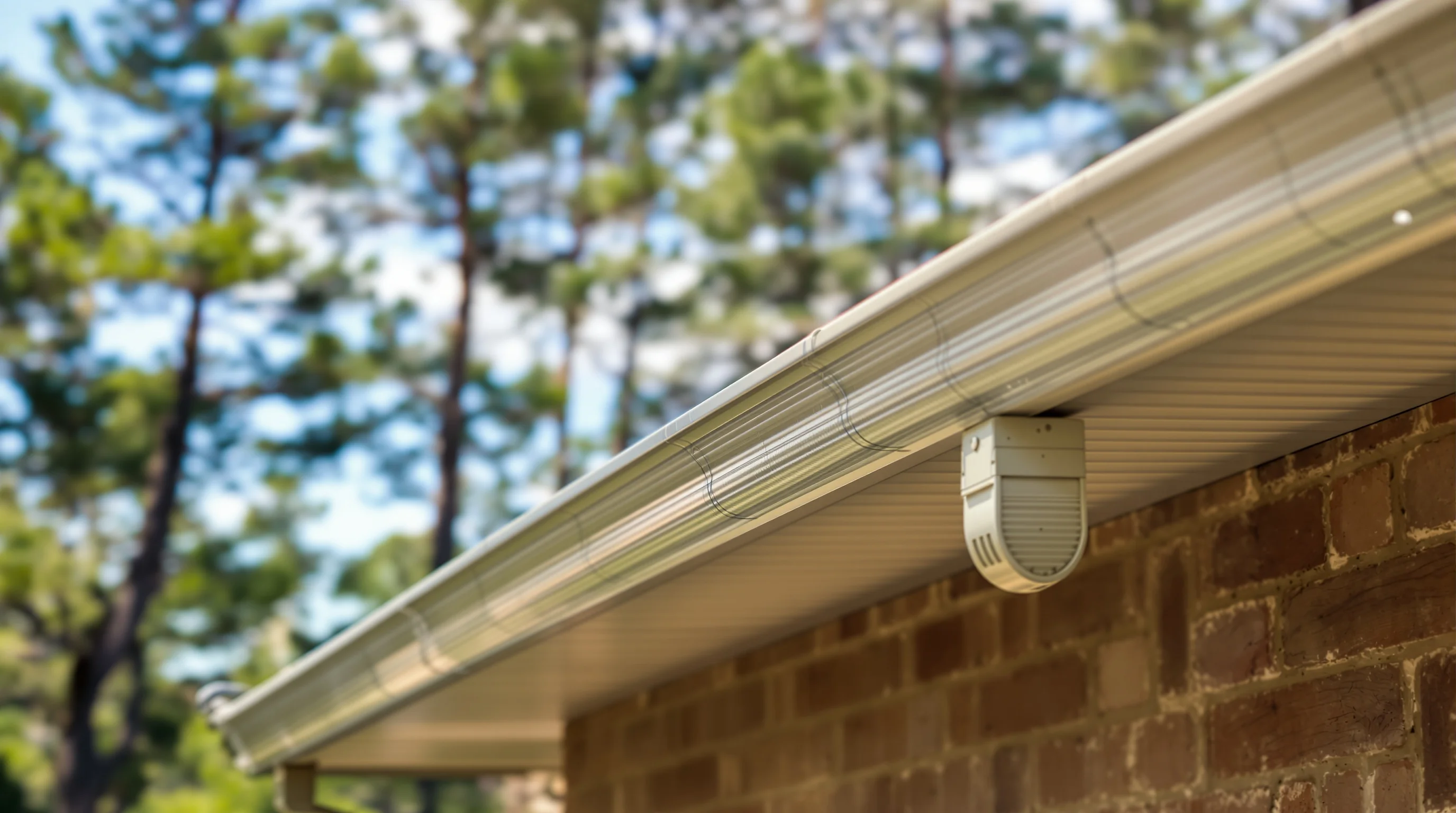
If you live in Summerville, you know the pine needle problem. Those longleaf pines that make our town beautiful also dump thousands of needles into your gutters every season. You clean them out in the spring, and by July they are clogged again. That is why so many homeowners look into gutter guards.
But not all gutter guards work the same way when pine needles are involved. We have installed and serviced every major type in Summerville, and the differences matter more than you might think.
Mesh Guards vs. Surface Tension Systems
Gutter guards fall into two main categories. Mesh screens sit on top of your gutters with small holes that keep debris out but let water through. Surface-tension systems (sometimes called reverse-curve) use water adhesion — water flows over a curved surface and into the gutter while debris slides off the edge.
In theory, both work. In practice, they perform very differently when pine needles are involved.
How Mesh Guards Handle Pine Needles
Fine stainless steel mesh with 40 to 50 micron openings is the gold standard for pine needle country. The holes are small enough that pine needles cannot poke through, but water passes easily. The key is the frame design — the mesh needs to be taut and slightly crowned (curved upward in the center) so debris slides to the edges and falls off. Flat mesh panels tend to collect pine straw on top that eventually turns into a mat.
In our Summerville installations, micro-mesh with a crowned profile has been the most reliable. Needles shed naturally, and even in heavy storms, water flow stays strong.
How Surface Tension Handles Pine Needles
In theory, needles slide right off a smooth curved surface. In practice, we have seen two recurring problems in Summerville. First, short pine needles can get trapped at the slit where water enters — they are not long enough to be pushed off by wind or rain. Second, the curved covers collect a layer of pollen and fine dust that creates a film. In a heavy downpour, water can overshoot the slit entirely and pour down the front of your gutter.
Installation Quality Matters More Than Brand
We cannot emphasize this enough. A cheap mesh guard installed poorly will fail. An expensive surface-tension guard installed poorly will also fail. We have seen $2,000 gutter guard jobs that leaked because the installers did not seal the end caps. We have seen $500 DIY mesh jobs that worked perfectly because the homeowner took the time to get the slope right.
Stay Away From Foam and Brush Guards
Foam inserts sit inside the gutter and let water pass through. Sounds good, but pine needles get embedded in the foam, decompose, and turn into a stinking, clogged mess. Brush-style guards catch needles between bristles and are nearly as bad. We do not recommend either for Summerville homes.
Our Recommendation
For most Summerville homes under pine trees, we recommend professional-grade stainless steel micro-mesh with a crowned profile. Expect to pay $12 to $20 per linear foot installed. Budget for an annual inspection — needles can still pile up on top during heavy wind storms.
If you have a metal roof, skip the surface-tension guards entirely. The water flow pattern on metal roofs does not work well with reverse-curve designs.
Need Gutter Guard Help?
We install gutter guards across Summerville and Dorchester County. We'll look at your gutters and trees and recommend the right solution.
(803) 855-1850
Free EstimateOur Services
- Roof Replacement
- Seamless Gutters
- Gutter Guards
- Metal Roofing